
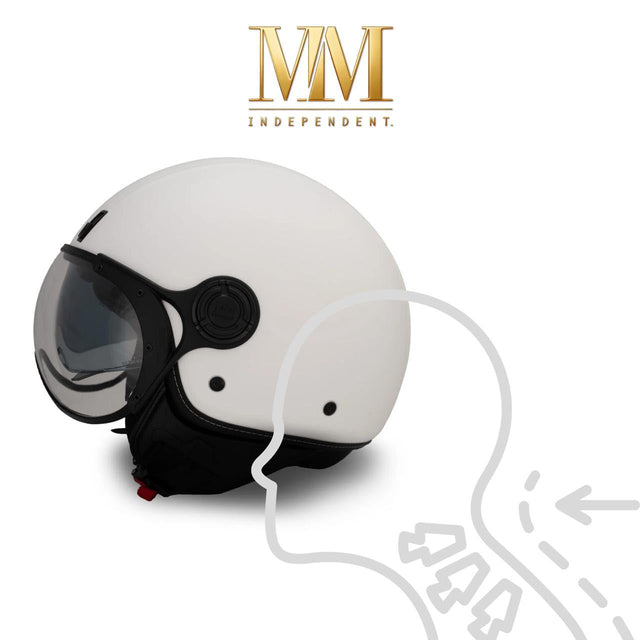
Motorcycle posture: choosing the right helmet and reducing neck fatigue
Good motorcycle posture appears when body, motorcycle and helmet work together without forcing you to compensate. At first you may barely notice it. Then traffic, head turns, wind and accumulated riding time make the neck start to speak up.
Helmet weight matters, but it is not the only factor. Weight distribution, size, stability and head position all count.
The right helmet is not simply the lightest one. It is the one that remains balanced in real use.
Why can helmet weight affect riding posture?
The neck muscles continuously support the head. A helmet adds mass that the neck must control while accelerating, braking and looking around. If the head stays in a natural position, that load is easier to manage; if the head projects forward, muscle demand increases.
This is where balance matters. A slightly heavier but well-centred helmet can feel more comfortable than a lighter one that pulls forward.
Measured weight and perceived weight are not always the same. The difference appears during the ride, not during a few seconds in front of a mirror.
Which postures can increase neck fatigue?
Holding the head forward for long periods, lifting the chin excessively or riding with rigid shoulders and arms can increase cervical tension. This may happen when fighting the wind or simply tensing up in traffic.
A more natural posture keeps the eyes oriented toward the road, the chin neutral and the shoulders relaxed, within the limits of the motorcycle, route and riding conditions.
Effective posture is dynamic rather than rigid: it should allow the body to move with the motorcycle.
Can the wrong helmet size increase discomfort?
An incorrect size can contribute to instability, pressure points and compensating movements.
A helmet that is too loose can move and make the rider tense up to control it. One that is too tight can create local pressure on forehead, temples or jaw and make it harder to stay relaxed.
This does not mean neck pain automatically comes from the helmet. But correct size should come before chasing the last few grams of weight.
Is a lighter helmet always the best choice?
A light helmet can make frequent urban riding more pleasant, but the scale alone does not tell you how the helmet will behave once worn.
Size, padding, visor, equipment and mass distribution affect both total weight and what the neck actually perceives.
A slightly heavier but stable and well-balanced helmet can feel more natural than a lighter model that moves or loads the front of the head.
That is why it is useful to understand how much jet-helmet weight really matters in daily use, together with practicality, field of view, fit and freedom of movement.
The best helmet is not necessarily the one that weighs least—it is the one you notice least during the journey.
City, mixed routes or faster roads: what changes?
In the city, the neck is involved in constant small movements: checking mirrors, scanning intersections, turning before manoeuvres, stopping and restarting. Lateral stability, field of view, ease of use and perceived lightness matter strongly.
As duration and speed increase, wind becomes more significant, the same position is held longer and imperfect balance can become more obvious.
A helmet that feels comfortable for ten minutes in traffic is not automatically the best choice for a long journey.
Before buying, compare jet and full-face helmets according to city use, route and season.
How to choose the right helmet without overcomplicating it
- How long is your average journey?
- How many times do you use the helmet during the day?
- Do you mainly ride in town or also on faster roads?
- Do you wear glasses or accessories that may affect fit?
The most important test comes next: the helmet should remain stable when you turn your head, without sliding, pulling forward or creating concentrated pressure. Padding should support without squeezing and the weight should feel naturally distributed.
With MM Independent helmets, weight should always be read together with size, configuration and model equipment. A‑Ventura solutions, for example, interpret urban mobility through a balance of practicality, comfort and visual presence.
When neck discomfort should not be ignored
Occasional fatigue can come from journey duration, wind, accumulated tension or rigid posture. Look at shoulders, arms and head position rather than automatically blaming the helmet.
Persistent pain, tingling, weakness or limited movement should be assessed by a doctor or physiotherapist.
Helmet fit is worth checking, but it should not become an automatic explanation for symptoms that may have other causes.
Motorcycle posture and choosing the right helmet
Good posture comes from the balance between body, helmet and riding conditions. Weight, fit, mass distribution, wind and journey length all interact.
A correctly sized helmet stays in place without constant readjustment, allows easy head movement and does not unnecessarily fatigue the neck.
At that point, protection and comfort stop looking like separate goals: the helmet simply supports the way you actually ride.