
Jet helmet in summer: managing heat and sweat without losing comfort
A jet helmet in summer is a natural choice when temperatures rise and journeys become frequent. Its more open structure and broad field of view suit urban mobility, but stationary traffic, strong sun and damp interiors can quickly change the experience.
In warm weather, size, lining and everyday habits need to work together. With a few good practices, heat remains something to manage rather than the main focus of the ride.
Why can a jet helmet still feel hot?
A jet helmet has a more direct relationship with airflow, but it does not create a cool bubble. When you are stopped in traffic, ventilation drops, and if the shell has been sitting in the sun, stored heat is felt inside too.
Sweat is a normal part of hot-weather riding. Repeated short journeys, stops and putting the helmet back on while still damp often matter more than one isolated hot day.
Summer comfort therefore begins before you ride and continues after you park.
Correct size is the first ally of summer comfort
A helmet that is too tight concentrates pressure on temples and forehead, which becomes more annoying with heat and humidity. A loose helmet can move and rub, encouraging tension in the neck and jaw.
Correct fit keeps the helmet stable without turning snugness into restriction.
How can you reduce heat and sweat during journeys?
Comfort starts with simple habits.
Avoid leaving the helmet in direct sun or closed for long periods in a hot top box. Store it in the shade and let stored heat dissipate before putting it back on.
Starting with dry hair and forehead helps the lining absorb moisture more slowly.
A thin technical skull cap can help manage moisture only if it does not alter the intended fit. Any accessory should respect the helmet’s sizing and stability.
Helmet interiors: airing after use matters as much as cleaning
After a hot day, immediately closing the helmet in a bag or top box traps moisture and odours. Let it breathe in a dry, ventilated place away from direct heat.
The interior needs to be genuinely dry, not just dry on the surface.
When sweating is frequent, follow a gentle, consistent routine for cleaning and maintaining the lining. Removable interiors should be washed according to model instructions; fixed interiors need appropriate products, not alcohol, solvents or aggressive household cleaners.
Does helmet colour change the experience in the sun?
A dark surface generally absorbs more heat when left in direct sunlight, while a lighter tone can feel visually and physically lighter in bright months.
This does not make black wrong or white universally better. Where the helmet is stored and how long it remains in direct sun usually matter more.
Before choosing by taste alone, consider light and dark colours in relation to season and real habits.
Jet helmet and city riding: why summer highlights this format
Urban riding requires frequent head movements, attention at intersections and repeated stopping and restarting. The jet helmet offers immediacy, broad vision and a sense of openness that fits daily mobility.
In summer, these benefits are often even more noticeable on short repeated journeys.
The helmet should still be chosen for the real route. Riders who also use faster or longer roads need to consider wind, duration and overall configuration. It is better to evaluate comfort, practicality and style within your real city routine than to search for a single “summer helmet” for every situation.
Before summer: five checks that make a difference
- Check that the size is stable and free from local pressure points.
- Check visor, closure and components for correct operation.
- Inspect the interior and clean it according to the model configuration.
- Choose a shaded, ventilated place to store the helmet.
- Consider your route: city, mixed and faster roads create different comfort requirements.
MM Independent: summer comfort without giving up identity
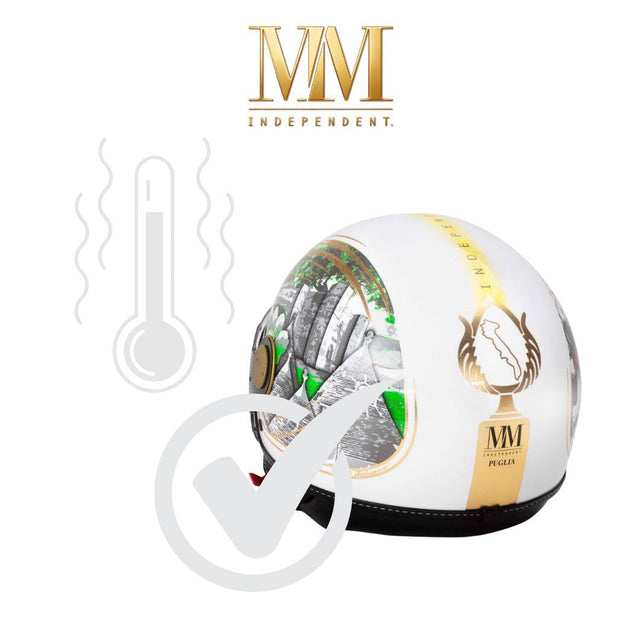
In MM Independent helmets, colour, graphics and finish create identity while size, lining and equipment need to be evaluated on the chosen model. Light monochrome, dark finish or regional graphics can all work well.
Comfort does not require giving up style; it comes from understanding the helmet and using it correctly.
Jet helmet in summer: freshness starts before the ride
A jet helmet in summer works best as part of an intelligent routine: correct size, dry lining, limited sun exposure and regular care.
The goal is to avoid amplifying heat through poor habits.
You know you have found the right balance when the helmet remains stable, clean and pleasant to wear even on a bright hot day. The traffic and summer sun remain, but the helmet does not add fatigue—it supports movement and leaves your attention on the road.