
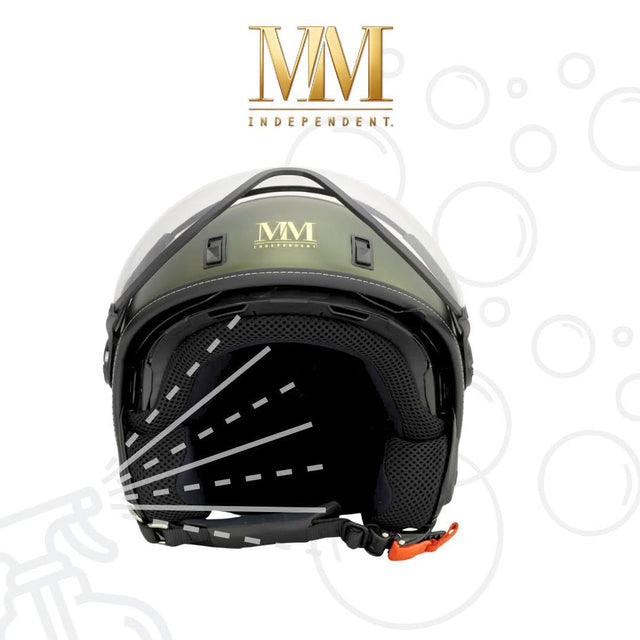
Helmet care: how and when to clean the interior properly
Helmet care is not only about the outer shell, visor or shine of the finishes. The part closest to you—and one of the biggest influences on daily comfort—is also the easiest to forget: the interior.
Helmet linings absorb sweat, humidity, dust, skin residue and odours. This happens in summer, when heat makes everything more noticeable; in the city, where a helmet may be put on and taken off several times a day; and even on short journeys, because frequency of use matters more than distance.
This is where helmet care becomes a quality habit: not an obsession or a complicated procedure, but a simple routine that keeps the helmet more pleasant, hygienic and consistent with the quality of the product.
MM Independent helmets often use technical interiors, high-sweat-absorption fabrics, micro-perforated mesh and comfort-oriented treatments. Even well-designed interiors still need correct maintenance.
Why do helmet interiors get dirtier than you think?
The inside of a helmet gets dirty quietly. Unlike a dusty shell or marked visor, it may not look obviously dirty.
But it is in direct contact with skin, hair and body heat. Each time you wear the helmet—especially in warmer weather—the padding absorbs some of the moisture produced during use.
If the helmet is then closed immediately, stored in a poorly ventilated space or put away while still warm, that moisture stays inside longer. This is how stale smells and loss of freshness develop.
Regular airing and hygiene interrupt that cycle before it becomes unpleasant.
How often should the interior be cleaned?
There is no single schedule for everyone. It depends on how often you ride, the season and how much you sweat.
Anyone using a jet helmet every day in the city should favour light, regular maintenance rather than occasional drastic cleaning.
After very hot days, long rides or intensive use, the first correct step is simply to let the helmet breathe. Do not immediately seal it in a top box or bag while the interior is still damp.
Deeper cleaning can be done periodically, when the lining starts to lose freshness or after intensive summer use. The goal is not to wait until a strong smell appears, but to prevent it.
Removable vs non-removable interiors: what changes?
With removable, washable interiors, maintenance can be more thorough. Pads and liners can be carefully removed according to the model instructions and washed gently.
With non-removable interiors—or for quick maintenance between full washes—use products specifically designed for helmet fabrics rather than improvised household solutions.
Cleaning the interior does not mean soaking it. It means treating fabric, stitching and padding in a controlled way while allowing proper drying.
How do you wash removable interiors without damaging them?
If the model allows removal, detach pads and liners carefully without pulling hard on fasteners or seams.
Unless the product instructions say otherwise, hand-wash with lukewarm water and mild soap. A gentle wash is always preferable to aggressive treatment.
Avoid strong detergents, heavily scented fabric softeners and intensive washing. Air-dry away from direct heat, tumble dryers, radiators or strong sun.
An interior that feels dry outside but remains damp deeper inside can quickly develop odours, so allow sufficient drying time before refitting it.
How do you freshen the helmet between washes?
Between deep cleans, maintenance can be simpler. A dedicated interior spray can help sanitise, neutralise odours and refresh the fabric without rinsing.
MM Independent offers a helmet hygiene and sanitising spray for interiors and fabrics, particularly useful after intensive use or hot days.
Use an appropriate amount, allow it to work, and let the interior dry completely before wearing the helmet again. Hygiene should not become product build-up.
Good care also includes related parts such as visors and finishes.
Helmet care: mistakes to avoid
First: using unsuitable products. Air fresheners, generic cleaners, alcohol and aggressive degreasers are not designed for fabrics that remain close to skin.
Second: rushing. Reassembling damp liners or closing the helmet immediately after cleaning undermines the whole process. Drying is part of helmet care.
Third: cleaning only once the problem is obvious. If the interior already smells strongly, maintenance has arrived late. A light but regular routine is better, especially in warm weather.
Summer, sweat and daily use: when should frequency increase?
In summer, care should become more consistent—not necessarily more complicated.
Heat increases perspiration, the sun warms the shell and interiors are more likely to remain damp after use. Air the helmet more often, freshen it regularly and avoid leaving it compressed for hours in hot, closed spaces.
How you store the helmet also affects external ageing. See our guide on protecting a helmet from fading and premature ageing.
A simple routine that helps the helmet last better
Helmet care does not need to become complicated. Make it an intelligent routine: air after use, clean when necessary, refresh between washes, dry completely and avoid aggressive products.
Small habits make a major difference over time. They keep the interior more pleasant, reduce odours and help preserve perceived quality.
An MM Independent helmet is designed to stand out on the outside through design, finishes and identity. But you appreciate it just as much on the inside, every time it still feels fresh, stable and cared for.
Ultimately, helmet care is simply the most practical way to respect the equipment that accompanies you every day on two wheels.