
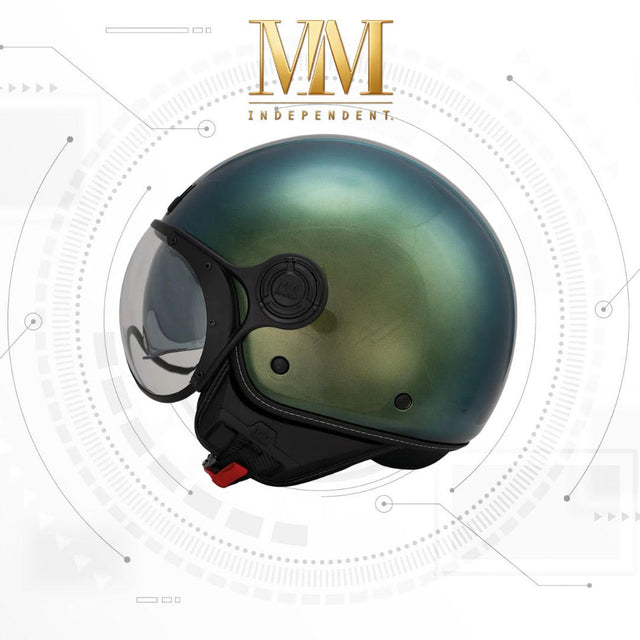
Jet or full-face helmet: how to choose based on city riding, route and season
Choosing between a jet helmet and a full-face helmet is not an abstract or purely technical question. It comes down to how you ride every day: where you travel, how long your journeys are, what season you ride in and what level and type of protection you prefer to wear.
In the city, riding means traffic, traffic lights, frequent stops and constant changes of pace. In this environment, a helmet is not just protective equipment: it becomes part of the riding experience.
Understanding which helmet type suits you best can improve comfort, confidence and awareness.
Jet or full-face helmet: what is the difference in real-world use?
The main difference between a jet and a full-face helmet is especially noticeable in urban riding.
A jet helmet is designed to provide:
• a wide field of vision
• greater awareness of the surroundings
• natural ventilation
• a lighter, more open feeling in everyday use
A full-face helmet is generally designed for:
• longer journeys
• more sustained speeds
• extra-urban roads
• more demanding weather conditions
• more extensive coverage
There is no universally correct choice. The right choice depends on how you actually use the road every day.
Why is a jet helmet often preferred in the city?
Urban riders deal with dense traffic, stop-and-go movement, intersections, turns and pedestrians, often over short but repeated journeys.
In this environment, the jet helmet can be particularly practical.
Its open design supports peripheral vision and spatial awareness, both important in city traffic.
This is one reason the jet helmet has become closely associated with contemporary urban mobility.
Read more about the technical differences between a jet helmet and a demi-jet.
When does a full-face helmet make more sense?
A full-face helmet often becomes more relevant when three factors come into play:
1. journey length
2. type of road
3. season
Riders who regularly use extra-urban roads, ring roads or faster routes often prefer a more enclosed form of protection, especially in colder months.
The choice is still personal: the advantages and trade-offs of each format should be considered against your everyday use, experience and the roads you actually ride.
There is no perfect solution—only the one that feels right for your needs.
How much does the season affect helmet choice?
Summer: heat and urban traffic
In summer, particularly in town, comfort becomes a priority.
A helmet needs to manage heat well, avoid unnecessary fatigue and remain pleasant during frequent stops.
The jet helmet suits these conditions thanks to natural airflow and its open construction, making it especially practical for summer city riding.
Winter: cold and wind
In winter, wind, humidity and low temperatures become more important.
People riding longer distances often prefer more enclosed protection. Riders who remain mainly in the city may still choose a jet helmet, combined with suitable clothing and accessories.
Once again, the decision depends on real-world use and personal preference, after understanding the characteristics of each helmet type.
Urban or mixed routes: how does the choice change?
Short urban journeys
For short, frequent trips such as commuting, errands and daily city use, many riders appreciate the practicality and immediacy of a jet helmet.
Mixed journeys: city plus short extra-urban stretches
On mixed routes, helmet choice becomes more personal. Factors include how often you leave the city, the time of day you ride and how much changing light affects you.
Some more advanced jet-helmet platforms can offer additional versatility, although many riders choose a full-face helmet for regular higher-speed sections.
A‑Ventura: a jet-helmet platform designed for a changing city
A‑Ventura is a jet-helmet platform used across several MM Independent collections, including Monocromo and Italia in Testa.
A‑Ventura stands out for:
• a more technology-focused approach
• solutions designed for advanced urban use
• a dual-visor system, useful when city light changes frequently
Comfort, glasses and fit: what really matters
A helmet works well when it does not distract you.
Three points make a major difference in everyday riding:
• a snug fit without excessive pressure
• compatibility with glasses
• stability when moving the head
A comfortable helmet allows you to focus on the road rather than on the equipment you are wearing.
How to choose the right size without stress
Helmet sizes are not universal between brands. Measure your head carefully, follow the size guide for the specific model and, whenever possible, take time to evaluate the fit.
MM Independent provides a size guide and a return and exchange policy designed to make that choice more straightforward.
Jet or full-face helmet: the choice is up to you
Ultimately, choosing between a jet or full-face helmet means answering two basic questions:
• how do you actually use the road every day?
• what type of protection do you prefer once you understand the characteristics of each format?
City riding, route type and season are not minor details: they can materially influence the choice.
A helmet chosen with awareness can improve comfort, confidence and enjoyment, making each journey feel more natural.