
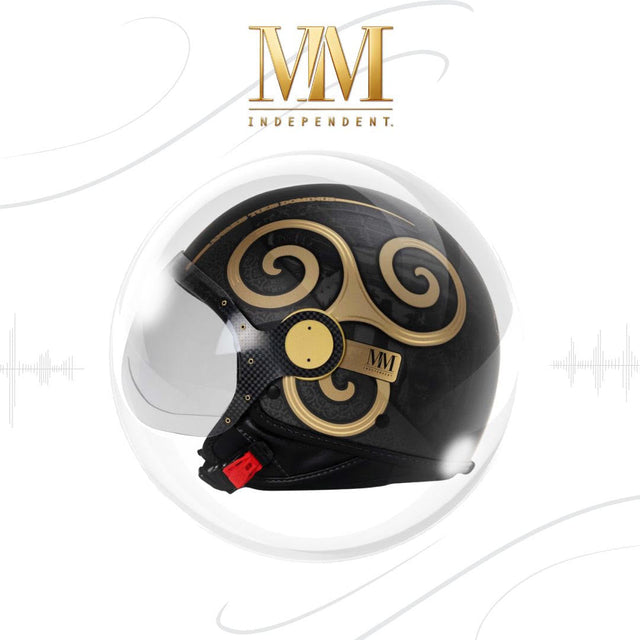
Noise and wind in a jet helmet: what causes them and how to improve comfort
What makes noise inside a helmet noticeable? The sound changes with the road, and a journey that looks pleasant on paper can become more tiring than expected.
In city traffic, noise is often relatively contained. On faster roads, wind, turbulence and riding position become more noticeable.
There is no single cause. Perceived noise depends on the relationship between helmet, head shape, motorcycle, speed and airflow. The same helmet can behave differently on a scooter and on a motorcycle with a different screen and riding position.
Why do you hear wind and noise in a jet helmet?
A jet helmet has an open structure designed for broad vision, natural ventilation and ease of urban use. Its relationship with airflow is therefore more direct than that of a fully enclosed helmet.
At higher speeds or on windy days, airflow can create noise around the visor, ears and lower edge. Before judging a helmet on one detail, it is useful to compare jet and full-face helmets according to city use, route and season.
What really causes helmet noise?
Speed is the most obvious factor, but not the only one. Noise changes when airflow meets openings, accessories and surfaces that interrupt it. Head position also matters: lifting the chin or changing position behind a windscreen can alter pressure on the helmet immediately.
Fit and stability: the helmet should follow the head
An incorrect size can amplify discomfort. If the helmet is loose, it can move and let air enter at changing points; if it is too tight, local pressure can make noise harder to tolerate.
Correct fit keeps the helmet stable and reduces the need to tense neck and shoulders when wind increases.
Visor, accessories and windscreen change airflow
A visor that is not fully closed or fitted correctly can create whistling. Intercoms, external mounts, jacket collars and windscreens also influence airflow.
A tall screen can even increase turbulence if it directs disturbed air toward the helmet.
City and faster roads: the same helmet behaves differently
In urban riding, the helmet is put on and removed frequently, the head turns constantly and comfort depends strongly on perceived lightness, field of view and ease of use. Wind noise is rarely the only factor.
To understand the overall balance, see comfort, practicality and style in real urban riding.
On ring roads and extra-urban routes, sustained speed and journey duration make wind-related characteristics more obvious. A helmet chosen mainly for short trips may feel less relaxing after many kilometres.
The useful question is not only “how noisy is it?”, but “how does it behave on the route I actually ride?”
How to improve comfort without chasing miracle fixes
The first step is to check the size and wear the helmet correctly, with the chin strap adjusted and visor in the intended position.
Then observe when the discomfort begins: only above a certain speed, with crosswinds, behind a windscreen, or when turning the head?
That helps distinguish normal airflow characteristics from a fit or assembly problem.
Check that visor and components are intact and correctly secured. Unapproved accessories or modifications can change aerodynamics, approval conditions and behaviour.
Weight also matters together with noise: stable, well-distributed mass helps maintain a more natural position. See also how much jet-helmet weight matters in daily use.
When is noise normal and when should the helmet be checked?
A progressive increase in wind noise with speed is expected in an open configuration.
A sudden whistle, vibrating visor, moving component or noise that appears after the helmet has been dropped deserves attention. Check fasteners and integrity, and ask a retailer or qualified technician if necessary.
Helmet noise and comfort: the right choice starts from the real road
For MM Independent helmets, urban comfort is the balance of fit, stability, equipment and identity.
The jet remains a natural choice for urban scooter and motorcycle use, but it should be selected with a clear understanding of where and how it will be used.
You know the helmet is right when noise stays in the background, the head moves naturally and the ride does not become a fight against the air.
The best comfort is not absolute silence. It is the feeling that helmet, motorcycle and route are finally speaking the same language.