
How to clean and sanitise a jet helmet without damaging it: lining, visor and finishes
Once you start using a helmet regularly, you quickly notice that it does not get dirty evenly. The visor collects road grime, the interior reflects everyday use, and the finishes reveal how well the helmet is maintained.
The point is not obsessive daily polishing. It is to keep the helmet in a condition consistent with what it needs to do every day: protect, remain comfortable and stay clean without being damaged.
How do you start cleaning a jet helmet without damaging it?
The practical rule is simple: remove loose dust first, then clean.
- Place the helmet on a soft cloth in a stable position.
- Use a dry microfibre cloth to remove loose dust and grit.
- Only then clean each area: visor, shell and interior.
Do not use kitchen paper on the visor. It can create micro-scratches that become particularly noticeable in glare.
How do you clean a visor without scratching it?
The visor is one of the most delicate and important parts of the helmet. Lightly dampen a microfibre cloth with lukewarm water and wipe in straight, gentle passes without pressing.
For insects or dried residue, do not scrub while dry. Rest a damp cloth on the area for a few moments, let the dirt soften and then remove it gently.
Dry with a second clean microfibre cloth, again without pressure.
How do you clean the shell and finishes, especially matte surfaces?
Matte finishes can hide small signs of use well, but aggressive products and heavy rubbing can leave marks or uneven patches.
Use a slightly damp soft cloth and regular, gentle passes. If rain and dust have combined on the shell, first remove loose grit carefully rather than rubbing it dry.
The goal is not to make the helmet look untouched, but to keep the finish even without stressing the surface.
How do you sanitise a helmet with a non-removable lining?
If the lining cannot be removed, do not try to improvise with aggressive household products.
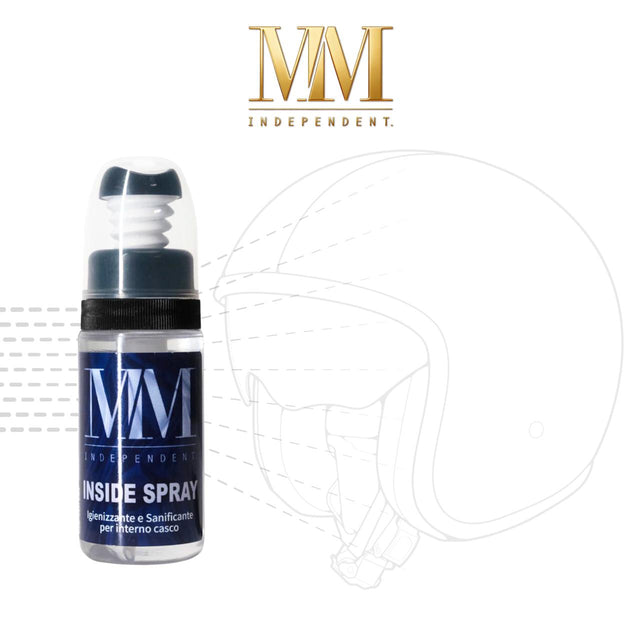
A dedicated product can be used in a controlled way. MM Independent’s Helmet Hygiene and Sanitising Spray is designed for internal hygiene, helping clean and neutralise odours with an anti-irritant formula and a light citronella fragrance.
The use described in the source instructions is straightforward: spray enough product to cover the internal area, leave it to act for 30 seconds and allow it to dry completely before wearing the helmet. No rinsing is required.
What if the helmet has a removable lining?
For models such as the A‑Ventura Monocromo Collection, which have removable interiors, the same principle of care applies.
Use a gentle 30°C cycle or hand-wash with mild soap. Always air-dry and avoid tumble dryers or direct heat sources.
How often should a jet helmet be cleaned?
- Visor: whenever you notice haze, residue or glare-related visibility issues.
- Interior: when persistent odours appear or after intensive use, especially in summer or heavy traffic.
- Shell: when dirt is visible or after rain and dust have accumulated together.
Maintenance does not need to become a long ritual. A little consistency prevents build-up.
Which mistakes can actually damage a jet helmet?
- rubbing a dusty or sandy visor while dry
- using solvents or aggressive cleaners not intended for helmet surfaces
- drying the interior with direct heat or leaving it closed while damp
- confusing effective cleaning with forceful scrubbing
The best maintenance is often invisible: you notice it when the helmet feels clean, comfortable and pleasant to wear.
Which MM Independent accessories can help with maintenance?
MM Independent’s accessories section includes the dedicated helmet hygiene spray and other useful accessories.
Final check before putting the helmet back on
Before riding, make a quick check: the visor should be dry and streak-free, the interior genuinely dry, and the closure clean and operating smoothly.
It takes only a few seconds and is the difference between simply cleaning the helmet and cleaning it properly.