
Helmet and glasses: a practical guide to visors, fogging and comfort
Anyone who rides with glasses knows that helmet compatibility is not a minor detail. It is essential.
The topic of helmets and glasses comes down to three practical issues:
- lateral pressure on the temples
- stability of the frame
- fogging control
If one of these does not work, riding comfort suffers immediately. In urban use, where a helmet is worn often for short but frequent journeys, the discomfort becomes even more noticeable.
The goal is not to find a helmet that “works well enough”, but one that genuinely works with your glasses and makes two essential everyday objects coexist naturally.
Why are many helmets uncomfortable with glasses?
The problem is simple: helmet padding and spectacle arms occupy the same space. If the fit or internal shape is not compatible, progressive pressure builds at the temples.
That pressure may feel manageable at first, but after ten or twenty minutes it can become genuinely uncomfortable. This is one of the most common reasons for dissatisfaction in daily helmet use.
Fit therefore becomes central. The first step is choosing the correct helmet size. Do not choose a larger size simply to create room for glasses: the helmet still needs a secure fit.
How should a jet helmet fit if you wear glasses?
A helmet that is genuinely compatible with glasses should allow the arms to slide into place naturally, without forcing them.
Three signs indicate a good fit:
- the arms slide in without excessive resistance
- the frame stays stable when you move your head
- pressure on the temples does not progressively increase
If one of these is missing, it is not something you simply have to “get used to”: the issue is the balance between the helmet’s internal shape, padding and size.
Fogging: the main frustration for riders with glasses
If pressure is the most immediate discomfort, fogging is often the most frustrating.
Temperature changes and humidity can create condensation on the visor. With glasses, the problem can happen twice: first the visor fogs, then the lenses.
In the city, it often becomes worse during stops because airflow decreases while humidity builds.
Two factors matter most:
- visor design
- adequate airflow
There is no universal miracle solution, but good habits can reduce the problem considerably.
Visor and urban use: choosing the right one
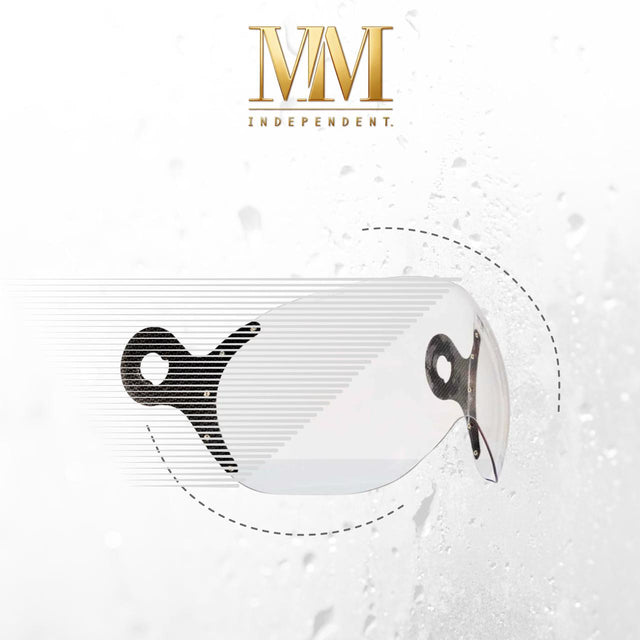
The visor affects the glasses-wearing experience more than many people expect. A clean visor in good condition and suited to the riding conditions improves overall comfort.
MM Independent’s accessories range includes compatible options such as:
- the clear visor, suitable for everyday and evening riding
- the black visor, useful in strong light
The choice is functional, not merely aesthetic. In city riding, changing light, traffic and frequent stops make consistency between helmet and visor important.
Long-term comfort: the twenty-minute test
Real comfort cannot be judged in the first few seconds. It reveals itself over time.
After around twenty minutes of urban riding, a glasses-compatible helmet should not:
- press on the temples
- move the glasses out of position
- require constant adjustments
If you keep touching your glasses, something is not properly calibrated. A helmet suited to riding with glasses should let you focus on the road rather than the equipment.
Accessories and consistency of use
Some urban riders also use communication devices to reduce distractions and keep their hands free. The Sena 3S Bluetooth intercom is available among MM Independent accessories and is designed to integrate into the helmet without upsetting its balance.
The same principle still applies: every accessory should solve a real need, not complicate the setup.
Helmet and glasses: choosing with care
Helmet and glasses compatibility is an integral part of urban riding. Pressure, stability and fogging are technical variables, but in practice they determine something very simple: comfort or discomfort.
A helmet chosen with attention to fit, visor and real-world use helps you ride without unnecessary distractions.
That is where the difference is made—not on paper, but on the road.